

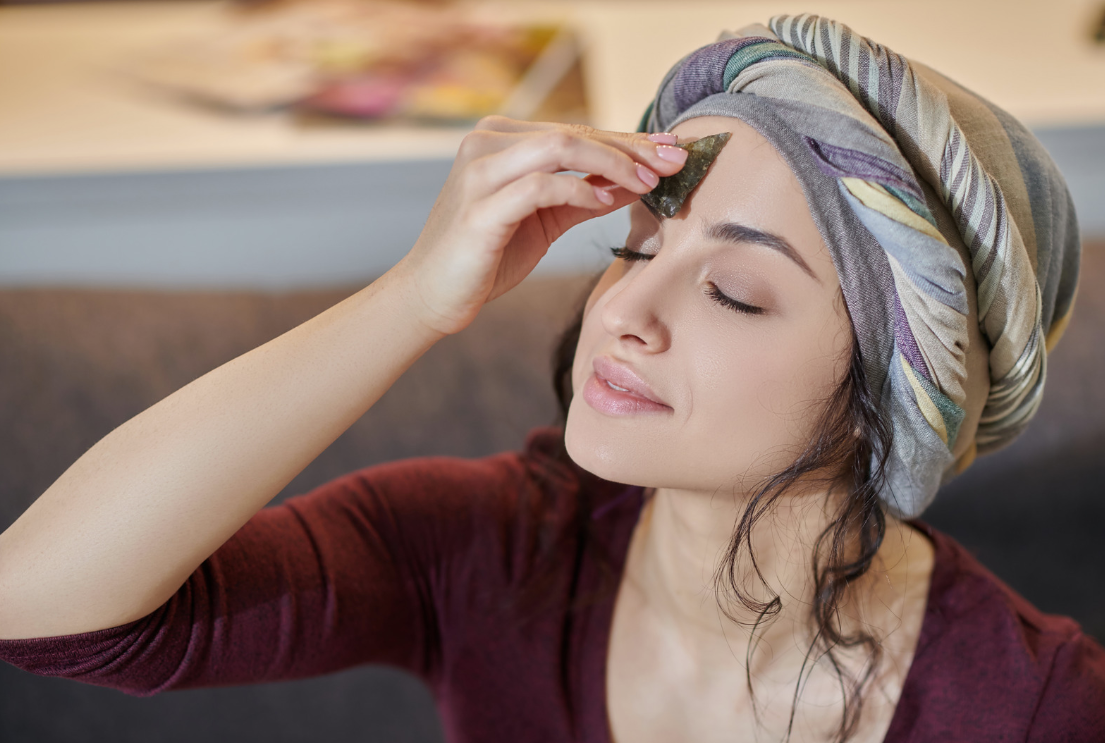
The “third eye” is a spiritual symbol associated with insight and perception. It is not an extra physical eye or a demonstrated way to predict death, read minds or diagnose a health problem. The important safety question is what a practice asks you to do—and how it affects your ordinary life.
Look at the actual practice
A short reflection on perspective is very different from prolonged sleep deprivation, extreme fasting, intense breathing or taking an unknown substance. A spiritual label does not make a risky activity safe. You can decline an exercise without failing a test or losing access to personal growth.
Sleep
Do not stay awake to seek visions or intentionally disrupt your sleep.
Body
Avoid forced breathing, unverified remedies and anything that causes pain.
Choice
Keep the right to stop, disagree and seek outside advice.
Claims to treat cautiously
- “Crystals heal your pineal gland.” A stone on your forehead is not a medical treatment.
- “A headache proves activation.” A symptom does not establish a spiritual cause.
- “You can now detect lies.” An impression is not proof of another person’s intentions.
- “You need protection from psychic attacks.” Fear is not evidence that an attack exists, and it should not be used to sell urgent protection.
This article does not recommend “decalcification” products, herbs or oils as a route to psychic ability. Do not stop prescribed care based on such advice.
A bounded alternative
If you like the symbolism, make it a question about perspective: “What am I overlooking?” Write one assumption and one piece of evidence that could challenge it. End after a few minutes. No unusual sensation, image or message is required.
Do not treat imagined scenes as recovered memories or forecasts. For broader reflection prompts, see chakra meanings and their limits.
When to stop and get help
Stop if the exercise makes you frightened, unable to sleep or unsure what is real. Seek medical help for unexplained hallucinations. The NHS outlines symptoms and urgent warning signs. Immediate danger or sudden severe confusion calls for emergency help, not another activation session.
Before joining a course
Ask about total cost, qualifications, refund terms and what happens if you become distressed. Avoid leaders who require secrecy, discourage healthcare or insist that every concern is resistance. A respectful facilitator accepts “no.” There is no obligation to open a third eye or purchase ongoing guidance.
The discussion on the third eye and its connection with the pineal gland is fascinating. I appreciate how the article integrates both spiritual and scientific perspectives, which can broaden our understanding of such a complex topic.
I agree. The balance between the mystical and scientific explanations adds depth to the subject. It’s intriguing to consider that ancient concepts might have modern scientific correlates.
Absolutely. It’s important to approach such topics with an open mind and consider various viewpoints. This can lead to a more comprehensive understanding.
The perspective that the third eye is neither inherently dangerous nor negative, but simply a tool for expanded understanding, is a refreshing take. It aligns with many philosophical traditions that emphasize personal growth through knowledge.
The article provides a comprehensive guide on the third eye, but I wonder how different cultural interpretations might influence one’s experience of opening the third eye. Could cultural backgrounds play a role in how individuals perceive and utilize this concept?
The mention of calcification in the pineal gland and its potential impacts on sleep and headaches is noteworthy. More scientific research is needed to draw conclusive correlations, but it’s a good starting point for further investigation.
The concept of awakening the third eye and its benefits on intuition seems beneficial, but it also raises questions about the psychological impacts. How can individuals ensure they are mentally prepared for such experiences?