

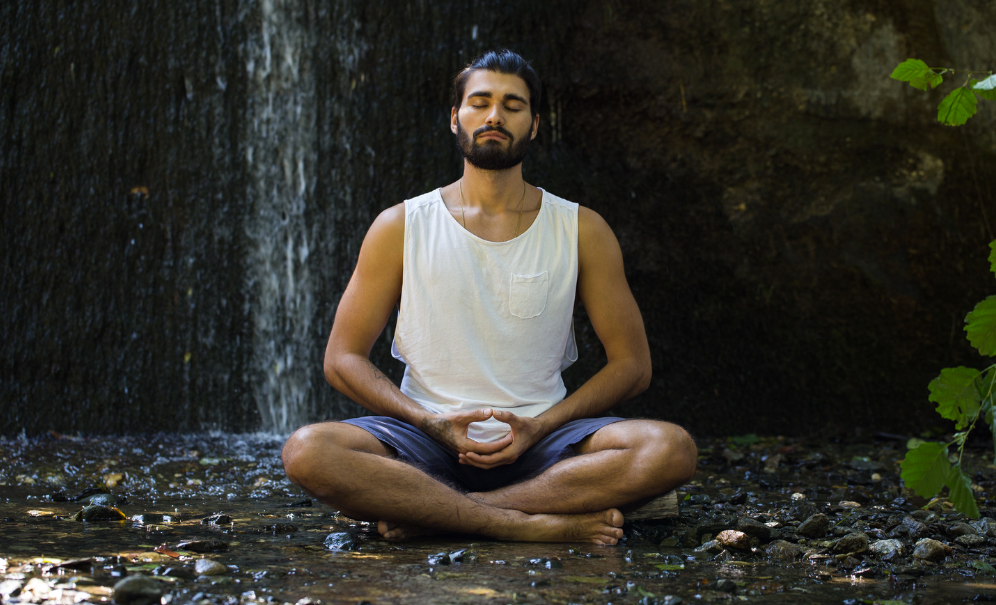
Meditation is a group of practices for working with attention and awareness. It may be a helpful part of managing stress or winding down, but it is not a cure-all, a guaranteed route to weight loss or a replacement for health care.
What the evidence supports—and what it does not
The National Center for Complementary and Integrative Health summarizes research on meditation and mindfulness. Some programs may help with stress, anxiety symptoms or sleep quality. Findings vary by practice and condition, and many studies have limitations. Pain outcomes are mixed; benefits are not universal.
Support for coping with an illness is not evidence that meditation treats the illness itself. Do not use it to replace or postpone conventional care. There is no sound basis here for promising that three days of meditation eliminates stress, that a fixed daily duration guarantees weight loss, or that a beginner practice prevents heart attacks or infections.
Start small; do not push through distress
Some people report unpleasant experiences, including anxiety or low mood. Stop or adapt the practice if it makes you feel worse, and discuss persistent concerns with a qualified clinician.
A practical beginner exercise
- Choose a comfortable seat or an easy standing position. You do not need special equipment.
- Set a short, manageable timer, such as two minutes. Treat this as an experiment rather than a performance test.
- Keep your eyes open or closed—whichever feels comfortable. Notice an ordinary sensation, such as your feet resting on the floor.
- When your attention wanders, gently return to that sensation. You have not failed.
- At the end, notice how you feel. Continue, change the exercise or stop according to your comfort.
Make the practice fit your life
Try a quiet pause before opening your email, an attentive walk or a moment of listening to everyday sounds. These are options, not obligations. If focusing on breathing feels uncomfortable, choose a neutral external object instead. You do not need to force deep breathing or hold your breath.
A short note can help you judge usefulness: “What did I try? Did it feel manageable? Did I want to do it again?” Avoid treating every change in mood as proof that the exercise worked; sleep, relationships and daily circumstances also affect how you feel.
When to get help instead
Persistent sleep difficulties, significant anxiety, depression, pain or substance-use concerns deserve appropriate assessment. A meditation app does not diagnose these problems. If you are in treatment, ask your care team how an optional practice fits with your existing plan.
Choosing a class or app
- Look for clear information about the instructor’s training and the limits of the program.
- Check subscription charges, renewal dates, privacy settings and cancellation steps.
- Avoid guarantees about curing illness, “rewiring” your brain on a fixed timetable or replacing prescribed care.
- Prefer a program that permits shorter sessions, open eyes and stopping when needed.
Common questions
Do I need to clear my mind?
No. The exercise is noticing where your attention goes and returning gently, not eliminating every thought.
Is more meditation always better?
No. A longer session is not automatically more suitable. Choose an amount that feels manageable and does not disrupt needed rest, care or daily responsibilities.
Can spiritual meditation and clinical mindfulness be treated as the same thing?
Not automatically. A spiritual tradition, a general app and a structured clinical program can have different aims, instruction and evidence. Check what a particular claim actually refers to.
‘Increases your pain threshold’? That sounds fantastic! I could use some help during my workouts. Perhaps I’ll give this whole meditation thing a try next time I’m struggling through leg day!
‘Fighting disease with meditation’? While that’s an interesting thought, I’d love to see more scientific evidence backing these claims before completely buying into them.
‘Meditation will solve all your problems’ – is that really what we’re suggesting here? Sure, it’s beneficial for many, but let’s not ignore those who may find it frustrating or unhelpful.
‘Losing weight through mindfulness’? Now that’s something I’d sign up for! Eating my favorite foods while meditating sounds like a win-win situation to me! 😋
I absolutely loved this article! Meditation has transformed my life in so many ways. I can attest to feeling more focused and less stressed since I started practicing regularly. Highly recommend it to everyone! 😊
While meditation does have its benefits, it’s important to note that not everyone experiences the same results. Research shows that individual experiences with meditation can vary significantly, depending on personal circumstances and mental health conditions.
Exactly! It’s crucial to remember that while meditation can be helpful, it should complement other methods of stress management, not replace them entirely.
That’s a valid point! People should approach meditation with realistic expectations rather than viewing it as an instant solution.
‘Better sleep through meditation’? Sounds like something you’d see in a late-night infomercial! I mean, if only falling asleep was as easy as humming ‘Om’ before bed! 😂
Honestly, this article feels a bit too optimistic about meditation. It oversimplifies the benefits and makes it sound like a magic cure-all. Life’s problems aren’t solved just by sitting quietly! 🤨