

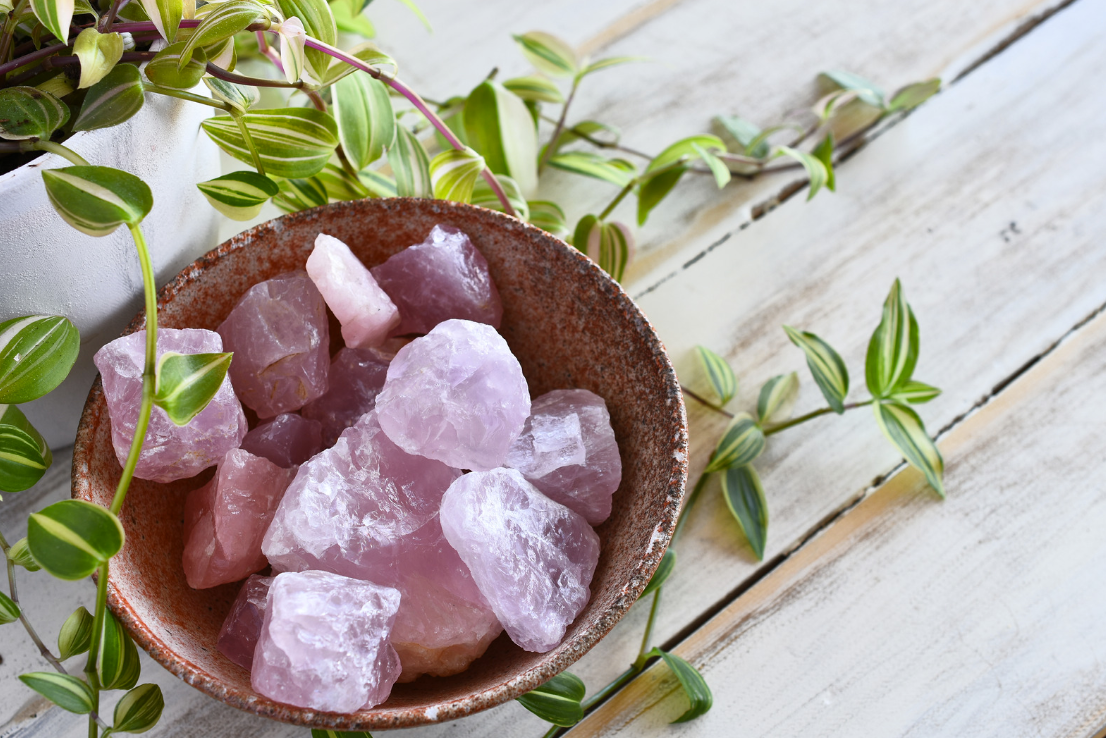
A smooth stone can be a convenient object to notice when you want a brief pause. Its texture, weight or color may give you something concrete to focus on. That is different from claiming that a crystal treats anxiety, depression, panic or PTSD.
Try a short sensory check
- Choose a clean, smooth object without sharp edges or loose pieces.
- Keep your eyes open and describe three visible details.
- If touching it is comfortable, notice its texture and weight without trying to produce a particular feeling.
- Notice where you are and one ordinary sound nearby.
- Put it down and choose the next practical thing you need to do.
This is an optional attention exercise, not a clinical grounding protocol. It may not suit you. If it increases discomfort, stop; there is no need to push through or assume that discomfort is a release of negative energy.
Choose for comfort, not claimed powers
A pebble, polished agate or familiar ornament may work as a reminder to pause. Choose something you already have if possible. The object’s usefulness here comes from how you use it, not a promise that a particular mineral can regulate your nervous system or remove someone else’s energy.
You might keep a small card beside it with a practical reminder such as “Check what I need” or “I can ask for help.” Avoid an assurance like “Everything is safe” when a real situation still needs attention.
Handle stones sensibly
- Keep small stones away from children and pets who might swallow them.
- Do not put unknown minerals in drinking water or use them as a remedy.
- Do not grind or drill a stone for this exercise; dust and fragments require appropriate precautions.
- Avoid leaving an object loose where it could distract you while driving.
For more on separating symbolism from treatment, see our guide to crystal reflection and care.
A creative project is a separate choice
Painting a stone can be enjoyable, but it does not create a protective or healing object. Follow the paint’s instructions, protect your workspace and obtain permission before leaving decorated objects on someone else’s property. Do not collect rocks from places where collection is prohibited.
When a pause is not enough
Persistent distress, repeated panic or difficulty functioning deserves qualified support. An object should not become a reason to delay care or a rule that you cannot leave home without it. You can discuss concerns with a healthcare professional and choose a suitable approach.
The useful question is not “Which stone has enough power?” It is “What support or action would help me now?”
Incorporating grounding stones into everyday items like keychains or jewelry can be a convenient way to maintain mindfulness. Their versatility and the ability to customize them make them quite appealing.
The act of focusing on a grounding stone’s texture and temperature to tune out external distractions seems like a practical approach to mindfulness. It’s a tangible way to center oneself.
It’s fascinating to consider the ancient origins of rocks and how they’ve been repurposed in contemporary practices for mindfulness and stress relief. The historical aspect adds another layer to their significance.
The use of grounding stones as a method for reducing stress and anxiety is quite intriguing. It’s interesting how physical sensations can have such a profound impact on mental well-being.
The practice of decorating stones with positive affirmations to spread kindness is a thoughtful concept. Creating rock mandalas as a means of manifestation also adds an artistic dimension to the process.