

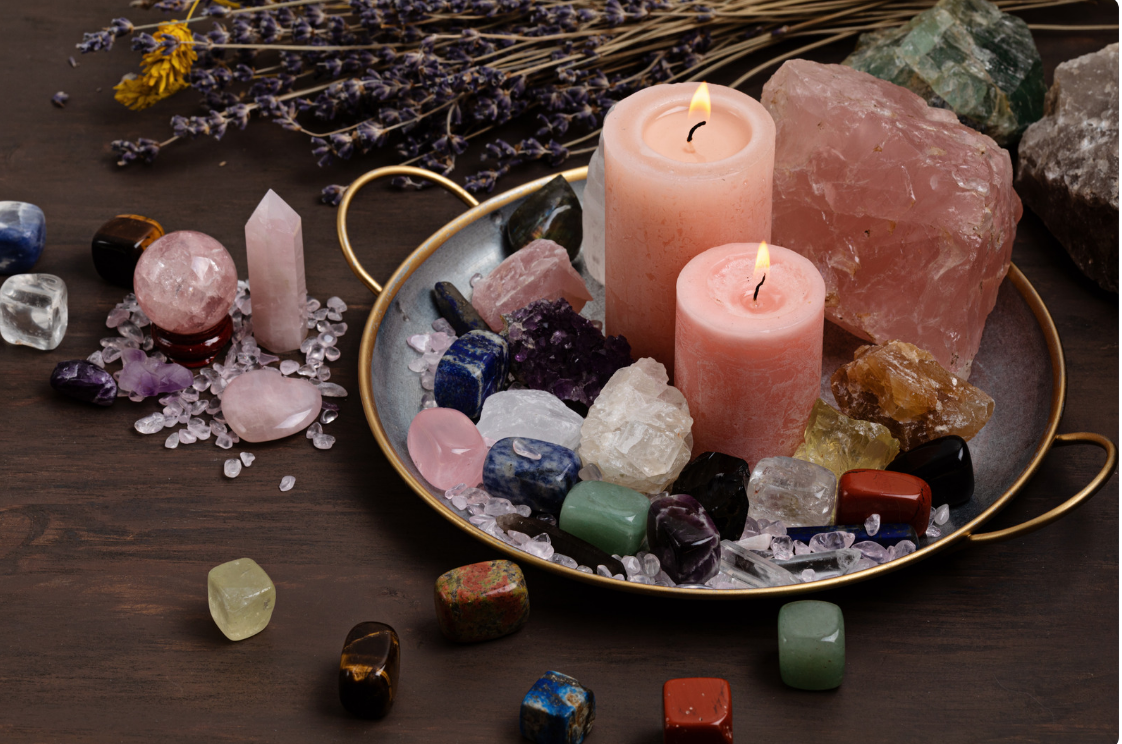
“Crystal healing” describes a spiritual practice in which people associate stones with qualities such as calm, courage or love. Those associations do not establish that a crystal treats headaches, improves finances or heals disease.
Choose for meaning, not a promised cure
You might like a stone’s color, texture, history or the idea it represents. That is enough reason to enjoy it within your budget. You do not need a costly specimen, a complete collection or a seller’s claim that a stone has chosen you.
A helpful question is: “What would I like this object to remind me to do?” Rose quartz could remind you to use kinder self-talk; a green stone could mark an intention to spend time outdoors. These are your chosen meanings, not measured powers.
Keep treatment separate
A crystal is not a headache remedy or a substitute for assessment, medication or mental-health care. New, persistent or concerning symptoms deserve appropriate professional help.
Four low-risk ways to use an object
- On a desk: use it as a reminder to take a manageable pause.
- During journaling: choose a question, then write a practical next step.
- As jewelry: wear a suitable, well-secured piece because you enjoy it.
- In a collection: label the specimen and learn about its actual mineral properties.
You can do all of these without buying a crystal. A photograph or familiar keepsake can also carry meaning.
Cleaning is not the same as spiritual cleansing
Physical cleaning removes ordinary dirt; spiritual cleansing is a belief-based ritual. A ritual does not make an unsafe mineral suitable for ingestion or erase the need for hygienic handling. There is no universal monthly schedule that every stone needs.
Identify the material before using water or cleaning products. Some stones or treatments can be damaged by soaking, salt, heat or sunlight. For an unknown specimen, conservative dry storage and advice from a knowledgeable mineral professional are better than guessing.
Avoid these shortcuts
- Do not put crystals into drinking water or ingest mineral powders.
- Do not heat a stone in a candle flame or create dust by grinding it.
- Do not assume that every polished or “natural” specimen is safe for a bath.
- Keep small, sharp or potentially hazardous pieces away from children and pets.
- Avoid loose stones in bedding, clothing or exercise spaces where they can cause discomfort or injury.
The Crystal Safety and Care guide offers material-specific questions to consider. Our meditation guide explains the limits of a related reflective practice.
How to assess a seller’s claim
Ask what the item actually is, whether it is treated and what care it needs. Be cautious about medical guarantees or pressure to buy protection. The FTC explains why health-benefit claims require scientific support; an appealing story is not a substitute.
While the concept of using crystals for healing is intriguing, I would be interested in seeing more scientific evidence supporting these practices.
I appreciate the clear instructions on when and how often to cleanse the crystals. Regular maintenance seems essential for their purported benefits.
The methods of cleansing and using crystals outlined in this article are quite fascinating. I appreciate the detailed instructions provided for beginners.
The idea of recharging crystals using natural elements like sunlight and moonlight is interesting. It gives a new perspective on how to maintain their effectiveness.
The article presents a comprehensive guide on the usage and cleansing of crystals. It’s helpful to know the specific crystals for various needs.
I agree. The breakdown of which crystals to use for particular purposes makes it easier for enthusiasts to choose their collection wisely.
It’s always good to have practical advice on how to integrate crystals into daily routines, especially for those new to this concept.