

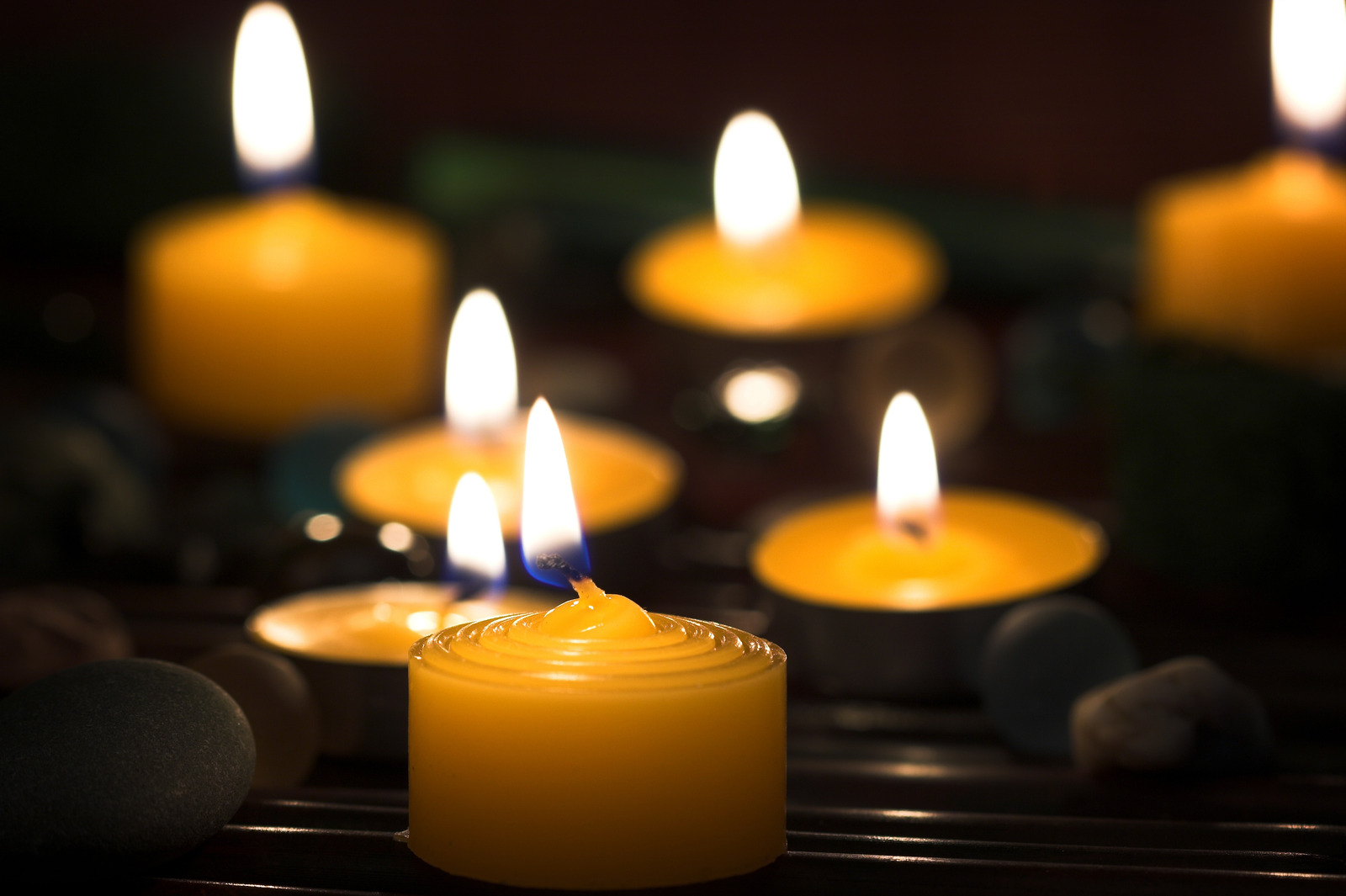
A candle gives a prayer or intention a beginning and an end. Switch on a flameless candle, say what you hope to make time for, and decide on one action before you switch it off. You can bring your own spiritual meaning to those few minutes.
You do not need special oils, herbs, crystals or a prescribed color to think about a goal.
Put safety before ritual rules
The U.S. Fire Administration’s candle guidance recommends considering battery-operated candles. If using a flame, use a stable holder and leave at least 12 inches (30.5 cm) between the candle and anything that can burn. Put it out whenever you leave the room, even for a moment, and before you go to sleep. Avoid lit candles in bedrooms, bathrooms and sleeping areas.
Do not add oils, herbs, paper or crystals to a burning candle or balance it on a jar. Follow the product’s instructions. Keep children and pets away, and never keep a flame burning because a ritual says blowing it out will spoil the result.
A windowsill beside a curtain may look like a good place for a ritual until a breeze moves the fabric. On a crowded desk, loose notes and the sleeve of a sweater can move, too. If the clear space is hard to maintain, use a battery candle or the light of an ordinary lamp.
Color can be a personal prompt
White: pause
You might ask “What deserves a little quiet attention?” It is not a promise of healing.
Green: care
You might consider one practical way to care for your surroundings. It does not attract wealth by itself.
Purple: reflection
You might explore what you believe and why. It does not activate psychic sight.
These are optional prompts proposed for this exercise, not universal meanings. Choose any color you like or use no candle.
Turn an intention into an action
- Name a goal within your influence, such as preparing for a conversation or reviewing a plan.
- Note what remains uncertain or depends on another person’s choice.
- Choose one manageable action and a time to revisit it.
- End the reflection and safely switch off the light or extinguish the flame.
For example, an intention to start drawing again could end with setting a pencil and sketchbook beside your chair for tomorrow. Switch off the battery candle when the materials are ready. Tomorrow you can spend your time drawing, even if you skip the ritual.
You do not need to burn a written intention, stare into a flame or keep repeating the exercise until something happens. Stop if the practice feels pressured or uncomfortable.
A flame is not a message you must obey
A flicker, sound or wax pattern does not establish that a spirit is present or that danger is approaching. Do not use it to make medical, financial or relationship decisions.
Can candle rituals still be meaningful?
Yes, as personal or religious symbolism. Meaning and guaranteed effects are different. For a low-pressure practice, read our daily spiritual routine. For relationships, see love spells, consent and safety.
The concept of using fire for both physical and spiritual purposes is intriguing. It is true that fire has played a significant role in human development and culture.
I appreciate the detailed explanation of how to use candles for manifestation and setting intentions. It’s a practice that, while not universally accepted, has its own merit depending on one’s beliefs.
The integration of fire into cultural and spiritual practices underscores its significance beyond mere utility. The historical and mythological references to fire add depth to its current uses.
The emphasis on the specific colors of candles and their associated energies is quite comprehensive. It’s clear that each color is thought to serve a unique purpose within this practice.
Indeed, the breakdown of candle colors and their chakras is meticulous. The association with spiritual and emotional well-being is quite compelling for those who follow such practices.
While the color associations may not be scientifically proven, they provide an interesting framework for those who find comfort and strength in these rituals.
The symbolic use of candles in various contexts, from religious ceremonies to personal meditations, shows the versatility and universal appeal of fire. It’s interesting to see how different colors are associated with different intentions.